


(no subject)
Jun. 8th, 2026 08:46 pm![[personal profile]](https://www.dreamwidth.org/img/silk/identity/user.png) flemmings
flemmingsToday was cool-for-June which means muggy. I would have been perfectly happy sitting on the couch, only what I did was go out and hack vines in the back yard. I had this brilliant idea of buying a 100 ft extension cord and taking my hedge trimmer to the great growth down by the garage. Which might have worked if I could get the uhh female end of the cord into the prongs of the trimmer. But I couldn't. Not enough upper body strength to push it snug. So I attacked them with the edged saw with a handle thingy, and slew them in great numbers, and filled a whole garden bag: and sweated several litres of water out of me. This was after I'd had my shower, naturally.
Then went up to the LCBO for vodka because everything hurts in this weather, and Farm Boy for dinner, various items from their Moroccan menu except they thought a Moroccan couscous would be improved by corn, most jnauthentically. Which I can't eat, of course. So I picked the niblets out as best I could but that put me off the thing
Came home, drank a cooler, went out to retrieve my tools: and of course had to hack away at more vines even though I know mosquitoes come out in the evening. It's going to rain the rest of the week, starting tomorrow night, and I want to get the uhh tree dust, whatever that is properly called, swept up before it all turns to paste. And I need more garden bags, though I finally figured out how to get them open. Upend them and put them over your head, and bang the unmoving last foot from inside. I'm sure it looks odd but it works.
But now I need another shower.
Then went up to the LCBO for vodka because everything hurts in this weather, and Farm Boy for dinner, various items from their Moroccan menu except they thought a Moroccan couscous would be improved by corn, most jnauthentically. Which I can't eat, of course. So I picked the niblets out as best I could but that put me off the thing
Came home, drank a cooler, went out to retrieve my tools: and of course had to hack away at more vines even though I know mosquitoes come out in the evening. It's going to rain the rest of the week, starting tomorrow night, and I want to get the uhh tree dust, whatever that is properly called, swept up before it all turns to paste. And I need more garden bags, though I finally figured out how to get them open. Upend them and put them over your head, and bang the unmoving last foot from inside. I'm sure it looks odd but it works.
But now I need another shower.
Books read, May 2026
Jun. 9th, 2026 12:54 amswan_towerMuch less reading in May than in April. Partly that was because I was less in a mood for reading; partly it was because I started in on some longer, denser books that I didn't get through before the end of the month. The latter in particular is why this post skews toward shorter, lighter reading . . .
The Antiquarian’s Object of Desire, India Holton. Third of the "Love's Academic" series, and I'm glad to say this one felt stronger than its predecessor. It looks like I never posted about that one, so in brief: The Geographer's Map to Romance suffered from a collision between its core trope (the romantic pair are in a marriage of convenience but estranged) and the series pattern of "the characters will spar a lot while secretly being into each other and also sure the other person doesn't reciprocate their feelings." In the first book that worked fine, because the leads were rivals in a contest and started out by thoroughly deceiving one another in pursuit of their goals; it therefore made sense that any signs of romance would fall under suspicion of being just another gambit. But in the second book, it required a degree of emotional stupidity on the part of the characters that I found more grating than charming.
In this third book, the trope is friends-to-lovers, which means the growing warmth between them can be interpreted in that light/suppressed because they don't want to ruin the friendship. Meanwhile, the sparring is because the heroine's job security will be threatened if she's suspected of canoodling with a colleague, so they've agreed to fake-hate. This combination works much better than it did in the previous book. Meanwhile, though I found the magical plot to be slightly muddy in its execution, the ending was entertaining.
I think the series is complete here. Each book stands on its own, though (it's a series in the romance model, where the volumes follow different characters), so you can skip the second one if you want. Me, I think I've had enough of this particular madcap flavor for a while; I overdose on it very easily.
Star*Line 49.2. I've gone ahead and joined the Science Fiction Poetry Association, which means I now have a subscription to their quarterly poetry journal. I don't know that I have a ton to say about it, but poetry was a good match for my short attention span in May!
A Counterfeit Suitor, Darcie Wilde. Another of the Rosalind Thorne Regency mysteries. The mystery in this one did not pull together terribly well for me; there was never a point at which I felt the satisfying "click" of the pieces slotting into place, just "oh, okay, I guess that's what's going on." The personal side was much better, with the heroine's sordid family history rearing its head as a real threat to the life she's built for herself.
At this point I am done with the official Rosalind Thorne series, but I've been told the Useful Woman series is a direct continuation under a different name. So if I want more of these, they're available!
The Bishop’s Tale, Margaret Frazer. As mentioned before, I'm slightly sad that the last couple of books in this series have taken Frevisse out of her nunnery, because one of the things I enjoy here is the view into medieval religious life. However, the usual mystery series consideration applies: you can only have so many murders in one place! Especially when that place is supposed to be cloistered away from the world!
In this case the reason for the departure is very moving, though, and I liked the mystery. It was very obvious to me (as it probably is to many readers) just how the victim actually died -- as opposed to what the characters initially think happened -- but the "who" was less immediately obvious. It also built up to a moment of very effectively understated drama at the end.
The Fallow Year, Margaret Owen. Not actually a novel in the conventional sense, but at over 60K words I'm treating it like one. These are ten connected short stories Owen wrote (and posted to AO3) to cover the year that passes between the second and third books of the Little Thieves trilogy, and what goes on with Vanja and Emeric in that time. I sort of wish I'd known about these stories before I read Holy Terrors, because of course the key events here get described there. If you're invested in the characters, though, it's absolutely worth reading the mini-novel that explores those events in greater detail.
Platform Decay, Martha Wells. New Murderbot! Not my favorite Murderbot, though, I have to admit. It's a perfectly fine extraction mission with good character moments, but at this point I find myself wanting a stronger feeling that some kind of metaplot is approaching culmination, and that's just not what the series is here to do. Murderbot's emotional growth continues, but the external events are much more self-contained, rather than building much on previous installments (though there is a little bit of the latter).
The Water Kingdom: A Secret History of China, Philip Ball, narr. Derek Perkins. This was one of the longer, denser things I started, and the only one I finished this month. I'm not sure audiobook was the best choice: though my familiarity with Chinese names is better than Malagasy ones (cf. last month's post), it's not so excellent that I didn't occasionally lose track of details. Also, while I'm not qualified to judge Perkins' pronunciation, I was irritated by the frequency with which his intonation and pacing announced THIS IS A CHINESE NAME -- he has a tendency to put micro-pauses around them, in a way he doesn't for European names. Possibly that's meant to be an aid for listeners like me, but I found it grating.
The book itself, however, is great! Enough so that I bought a paper copy afterward so I can re-read the sections I'm the most interested in. Ball is comprehensive in his approach to the topic of "water in China": it starts off with information about the hydrology of the region and what its rivers are like, then wanders through the role of water in Chinese philosophy, why it plays such an important practical and symbolic role in politics, historical and modern efforts to control it, how it factors into poetry and art -- you name the angle, there's probably a chapter for it. The result is very interesting both from a "learn more about China" perspective and a "learn more about rivers" perspective.
The Boy’s Tale, Margaret Frazer. Because these are such comfort reads, I ended up reading a second one this month. Yay, we're back at the convent! I had a theory for who the killer was that I quite liked until circumstances pretty obviously spiked that theory, but it would have been in keeping with a pattern I've noticed with Frazer: the killer is rarely A Bad Person Who Deserves Their Punishment. Quite frequently it's someone for whom you're invited to have sympathy -- which does mean that, despite these being comfort reads, I shouldn't pack them too close together. The discovery of the culprit often comes with a side order of feeling bad for how everything fell out, even when I'm enjoying the story.
(originally posted at Swan Tower: https://www.swantower.com/2026/06/08/books-read-may-2026/)
The Antiquarian’s Object of Desire, India Holton. Third of the "Love's Academic" series, and I'm glad to say this one felt stronger than its predecessor. It looks like I never posted about that one, so in brief: The Geographer's Map to Romance suffered from a collision between its core trope (the romantic pair are in a marriage of convenience but estranged) and the series pattern of "the characters will spar a lot while secretly being into each other and also sure the other person doesn't reciprocate their feelings." In the first book that worked fine, because the leads were rivals in a contest and started out by thoroughly deceiving one another in pursuit of their goals; it therefore made sense that any signs of romance would fall under suspicion of being just another gambit. But in the second book, it required a degree of emotional stupidity on the part of the characters that I found more grating than charming.
In this third book, the trope is friends-to-lovers, which means the growing warmth between them can be interpreted in that light/suppressed because they don't want to ruin the friendship. Meanwhile, the sparring is because the heroine's job security will be threatened if she's suspected of canoodling with a colleague, so they've agreed to fake-hate. This combination works much better than it did in the previous book. Meanwhile, though I found the magical plot to be slightly muddy in its execution, the ending was entertaining.
I think the series is complete here. Each book stands on its own, though (it's a series in the romance model, where the volumes follow different characters), so you can skip the second one if you want. Me, I think I've had enough of this particular madcap flavor for a while; I overdose on it very easily.
Star*Line 49.2. I've gone ahead and joined the Science Fiction Poetry Association, which means I now have a subscription to their quarterly poetry journal. I don't know that I have a ton to say about it, but poetry was a good match for my short attention span in May!
A Counterfeit Suitor, Darcie Wilde. Another of the Rosalind Thorne Regency mysteries. The mystery in this one did not pull together terribly well for me; there was never a point at which I felt the satisfying "click" of the pieces slotting into place, just "oh, okay, I guess that's what's going on." The personal side was much better, with the heroine's sordid family history rearing its head as a real threat to the life she's built for herself.
At this point I am done with the official Rosalind Thorne series, but I've been told the Useful Woman series is a direct continuation under a different name. So if I want more of these, they're available!
The Bishop’s Tale, Margaret Frazer. As mentioned before, I'm slightly sad that the last couple of books in this series have taken Frevisse out of her nunnery, because one of the things I enjoy here is the view into medieval religious life. However, the usual mystery series consideration applies: you can only have so many murders in one place! Especially when that place is supposed to be cloistered away from the world!
In this case the reason for the departure is very moving, though, and I liked the mystery. It was very obvious to me (as it probably is to many readers) just how the victim actually died -- as opposed to what the characters initially think happened -- but the "who" was less immediately obvious. It also built up to a moment of very effectively understated drama at the end.
The Fallow Year, Margaret Owen. Not actually a novel in the conventional sense, but at over 60K words I'm treating it like one. These are ten connected short stories Owen wrote (and posted to AO3) to cover the year that passes between the second and third books of the Little Thieves trilogy, and what goes on with Vanja and Emeric in that time. I sort of wish I'd known about these stories before I read Holy Terrors, because of course the key events here get described there. If you're invested in the characters, though, it's absolutely worth reading the mini-novel that explores those events in greater detail.
Platform Decay, Martha Wells. New Murderbot! Not my favorite Murderbot, though, I have to admit. It's a perfectly fine extraction mission with good character moments, but at this point I find myself wanting a stronger feeling that some kind of metaplot is approaching culmination, and that's just not what the series is here to do. Murderbot's emotional growth continues, but the external events are much more self-contained, rather than building much on previous installments (though there is a little bit of the latter).
The Water Kingdom: A Secret History of China, Philip Ball, narr. Derek Perkins. This was one of the longer, denser things I started, and the only one I finished this month. I'm not sure audiobook was the best choice: though my familiarity with Chinese names is better than Malagasy ones (cf. last month's post), it's not so excellent that I didn't occasionally lose track of details. Also, while I'm not qualified to judge Perkins' pronunciation, I was irritated by the frequency with which his intonation and pacing announced THIS IS A CHINESE NAME -- he has a tendency to put micro-pauses around them, in a way he doesn't for European names. Possibly that's meant to be an aid for listeners like me, but I found it grating.
The book itself, however, is great! Enough so that I bought a paper copy afterward so I can re-read the sections I'm the most interested in. Ball is comprehensive in his approach to the topic of "water in China": it starts off with information about the hydrology of the region and what its rivers are like, then wanders through the role of water in Chinese philosophy, why it plays such an important practical and symbolic role in politics, historical and modern efforts to control it, how it factors into poetry and art -- you name the angle, there's probably a chapter for it. The result is very interesting both from a "learn more about China" perspective and a "learn more about rivers" perspective.
The Boy’s Tale, Margaret Frazer. Because these are such comfort reads, I ended up reading a second one this month. Yay, we're back at the convent! I had a theory for who the killer was that I quite liked until circumstances pretty obviously spiked that theory, but it would have been in keeping with a pattern I've noticed with Frazer: the killer is rarely A Bad Person Who Deserves Their Punishment. Quite frequently it's someone for whom you're invited to have sympathy -- which does mean that, despite these being comfort reads, I shouldn't pack them too close together. The discovery of the culprit often comes with a side order of feeling bad for how everything fell out, even when I'm enjoying the story.
(originally posted at Swan Tower: https://www.swantower.com/2026/06/08/books-read-may-2026/)
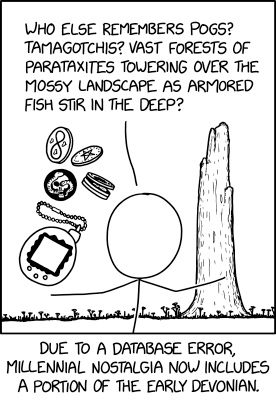
Jesus loves me, this I know, for Pete Hegseth tells me so
Jun. 8th, 2026 08:25 pm![[syndicated profile]](https://www.dreamwidth.org/img/silk/identity/feed.png) slacktivist_feed
slacktivist_feedEstablishment is a prison for the established religion just as much as it is for all of the other sects and slight-variations of that religion that establishment would officially forbid or disfavor.

Post Deadline Pinch Hits
Jun. 8th, 2026 09:54 pmrewindedcassette posting in ![[community profile]](https://www.dreamwidth.org/img/silk/identity/community.png) everythingisfemslashex
everythingisfemslashexThe deadline has passed, thank you to everyone who's submitted their assignment! We still have some pinch hits that need to be filled!
To claim, please send an e-mail to eifemod (at) gmail or comment on this post with the number of the PH you want to claim and your AO3 username. Comments on this post are screened.
Minimum for fic is 1000 words and for art it's a finished artwork (more details on the rules). As a reminder, works must posted in the F/F category since they must focus on one of the requested ships, which are by definition of the exchange already F/F. For example, if the request is Batman/Joker, your work will be F!Batman/F!Joker.
The deadline for these is June 13th, 8PM GMT+1. If you're interested in any of the PHs but need more time, send an e-mail to see if we can work something out.
Note: the new deadline is just for the yet to claim PHs. If you already have an extension, please stick to that date.
Mandatory pinch hits (need to be filled in order for the collection to open):
IPH3
Fandoms: Hit Man (2023), Twister (Movies 1996 2024) , Gotham (TV)
Requests on the app: https://autoao3app.fandom.tools/#/EverythingIsFemslash2026/user/fearfun
IPH4
Fandoms: Miraculous Ladybug, Shoujo Kakumei Utena | Revolutionary Girl Utena (Manga), Kamikaze Kaitou Jeanne | Phantom-Thief Jeanne, Original Work , 버려진 나의 최애를 위하여 | For My Derelict Favourite (Webcomic) , 仮面ライダーゼッツ | Kamen Rider ZEZTZ (TV) , 仮面ライダーギーツ | Kamen Rider Geats , 爆上戦隊ブンブンジャー | Bakuage Sentai Boonboomger (TV)
Requests on the app:https://autoao3app.fandom.tools/#/EverythingIsFemslash2026/user/Jen425 CLAIMED
IPH10
Fandoms: アサルトリリィ BOUQUET | Assault Lily Bouquet (Anime), Goshujin-sama to Kemonomimi no Shoujo Mel | My Master & Furry-eared Girl Mel (Manga), 魔女ノ結婚 | Majo no Kekkon | The Witches' Marriage (Manga) , Octopath Traveler (Video Game) , Octopath Traveler II (Video Game) , Octopath Traveler 0 (Video Game) , Ookami no Kawa o Kabutta Hitsujihime | Sheep Princess in Wolf's Clothing (Manga) , 少女たちの痕にくちづけを | Shoujo-tachi no Kizuato ni Kuchizuke wo | Kiss the Scars of the Girls (Manga) , 終末のイゼッタ | Shuumatsu no Izetta | Izetta: The Last Witch (Anime) , よるのないくに | Yoru no Nai Kuni | Nights of Azure (Video Games)
Requests on the app: https://autoao3app.fandom.tools/#/EverythingIsFemslash2026/user/rubylily
IPH13
Fandoms: The Last of Us (Video Games) , Mahou Shoujo Lyrical Nanoha | Magical Girl Lyrical Nanoha , 大逆転裁判 | Dai Gyakuten Saiban | The Great Ace Attorney Chronicles (Video Games) , Always Human (Webcomic)
Requests on the app: https://autoao3app.fandom.tools/#/EverythingIsFemslash2026/user/Vyslante
PH18
Fandoms: True Detective: Night Country (2024), Dickinson (TV), The Borgias (Showtime TV), Ready or Not (Movies), The Locked Tomb Series | Gideon the Ninth Series - Tamsyn Muir
Requests on the app:https://autoao3app.fandom.tools/#/EverythingIsFemslash2026/user/Susurrative CLAIMED
PH19
Fandoms: Devil May Cry (Gameverse), Jumanji: Welcome to the Jungle (Movies), Young Sherlock (TV 2026), Star Wars - All Media Types, Star Wars Sequel Trilogy, Knives Out (Movies), The Witcher (TV)
Requests on the app: autoao3app.fandom.tools/#/EverythingIsFemslash2026/user/beta_mirach
Nice to have:
IPH12
Fandoms: Yellowjackets (TV)
Requests on the app: https://autoao3app.fandom.tools/#/EverythingIsFemslash2026/user/TechnicolorRevel
PH17
Fandoms: Trolls (DreamWorks Movies), Sonic the Hedgehog (IDW Comics)
Requests on the app: autoao3app.fandom.tools/#/EverythingIsFemslash2026/user/IncurablePeppermint
Thank you!
To claim, please send an e-mail to eifemod (at) gmail or comment on this post with the number of the PH you want to claim and your AO3 username. Comments on this post are screened.
Minimum for fic is 1000 words and for art it's a finished artwork (more details on the rules). As a reminder, works must posted in the F/F category since they must focus on one of the requested ships, which are by definition of the exchange already F/F. For example, if the request is Batman/Joker, your work will be F!Batman/F!Joker.
The deadline for these is June 13th, 8PM GMT+1. If you're interested in any of the PHs but need more time, send an e-mail to see if we can work something out.
Note: the new deadline is just for the yet to claim PHs. If you already have an extension, please stick to that date.
Mandatory pinch hits (need to be filled in order for the collection to open):
IPH3
Fandoms: Hit Man (2023), Twister (Movies 1996 2024) , Gotham (TV)
Requests on the app: https://autoao3app.fandom.tools/#/EverythingIsFemslash2026/user/fearfun
Fandoms: Miraculous Ladybug, Shoujo Kakumei Utena | Revolutionary Girl Utena (Manga), Kamikaze Kaitou Jeanne | Phantom-Thief Jeanne, Original Work , 버려진 나의 최애를 위하여 | For My Derelict Favourite (Webcomic) , 仮面ライダーゼッツ | Kamen Rider ZEZTZ (TV) , 仮面ライダーギーツ | Kamen Rider Geats , 爆上戦隊ブンブンジャー | Bakuage Sentai Boonboomger (TV)
Requests on the app:
IPH10
Fandoms: アサルトリリィ BOUQUET | Assault Lily Bouquet (Anime), Goshujin-sama to Kemonomimi no Shoujo Mel | My Master & Furry-eared Girl Mel (Manga), 魔女ノ結婚 | Majo no Kekkon | The Witches' Marriage (Manga) , Octopath Traveler (Video Game) , Octopath Traveler II (Video Game) , Octopath Traveler 0 (Video Game) , Ookami no Kawa o Kabutta Hitsujihime | Sheep Princess in Wolf's Clothing (Manga) , 少女たちの痕にくちづけを | Shoujo-tachi no Kizuato ni Kuchizuke wo | Kiss the Scars of the Girls (Manga) , 終末のイゼッタ | Shuumatsu no Izetta | Izetta: The Last Witch (Anime) , よるのないくに | Yoru no Nai Kuni | Nights of Azure (Video Games)
Requests on the app: https://autoao3app.fandom.tools/#/EverythingIsFemslash2026/user/rubylily
IPH13
Fandoms: The Last of Us (Video Games) , Mahou Shoujo Lyrical Nanoha | Magical Girl Lyrical Nanoha , 大逆転裁判 | Dai Gyakuten Saiban | The Great Ace Attorney Chronicles (Video Games) , Always Human (Webcomic)
Requests on the app: https://autoao3app.fandom.tools/#/EverythingIsFemslash2026/user/Vyslante
Fandoms: True Detective: Night Country (2024), Dickinson (TV), The Borgias (Showtime TV), Ready or Not (Movies), The Locked Tomb Series | Gideon the Ninth Series - Tamsyn Muir
Requests on the app:
PH19
Fandoms: Devil May Cry (Gameverse), Jumanji: Welcome to the Jungle (Movies), Young Sherlock (TV 2026), Star Wars - All Media Types, Star Wars Sequel Trilogy, Knives Out (Movies), The Witcher (TV)
Requests on the app: autoao3app.fandom.tools/#/EverythingIsFemslash2026/user/beta_mirach
Nice to have:
IPH12
Fandoms: Yellowjackets (TV)
Requests on the app: https://autoao3app.fandom.tools/#/EverythingIsFemslash2026/user/TechnicolorRevel
PH17
Fandoms: Trolls (DreamWorks Movies), Sonic the Hedgehog (IDW Comics)
Requests on the app: autoao3app.fandom.tools/#/EverythingIsFemslash2026/user/IncurablePeppermint
Thank you!
Another Flatland Movie
Jun. 8th, 2026 10:04 pmffuturesBack when I published The Original Flatland Role Playing Game I somehow missed that there were TWO flatland films in production - the one that I missed was Flatland: The Film by Ladd Ehlinger, which was eventually put it on YouTube as a free download. It's more than an hour long, and updates the idea of Flatland very nicely.
For best results open the link in a tab
https://www.youtube.com/watch?v=avMX-Zf
For best results open the link in a tab
https://www.youtube.com/watch?v=avMX-Zf
CLIPPING TINY DESK CONCERT
Jun. 8th, 2026 08:54 pmrydra_wongFeaturing some of the most batshit possible Heath Robinson arrangements for making a tiny quasi-acoustic version of their industrial noise. MIDI-triggered mug pinging!
Daveed Diggs: "Thank y'all for this opportunity to do needlessly complicated shit."
ETA: https://www.youtube.com/shorts/jte7_yZuZVk -- short on some of the aforementioned batshit Heath Robinson arrangements.
SpaceX rejected in attempt to get listed in the S&P 500 index! Bodes ill for AI IPOs...
Jun. 8th, 2026 01:18 pmthewayneAh, what a lovely article! Sometimes standards get upheld!
As you may have heard, SpaceX has filed to do an IPO (initial public offering [of stock shares]) and go on the stock market. Lots and lots of people are salivating, perhaps Leon Muskbrat most of all. They also filed with the New York Stock Exchange for a quick listing on the Standard & Poor 500 stock market index.
And they were rejected to get listed on that index.
HAD they been accepted, their valuation would have skyrocketed, no pun intended. Lots of institutional investors buy funds directly based on the S&P rather than or in addition to buying individual stocks, so that mix would have contained SpaceX immediately.
What squelched the deal?
A basic problem that Musk-lead companies have long had: profitability.
In order to be included in the S&P 500, the company has to be currently profitable, and must have been profitable in the four preceding quarters. SpaceX is not currently posting a profit, and never has. There is also a rule that they must release at least 10% of their shares to be publicly traded, SpaceX is going to release 3%. After a month-long consultation to decide whether to allow the rules to be waved to allow SpaceX into the club, the decision was made to not open the door.
This may hamper Muskbrat's quest to become the world's first trillionaire. Now, will he alter the IPO to let loose more shares to meet the 10% threshold, and will he alter operations to make it more profitable? I expect that among the things dragging it down is he's making SpaceX buy almost all of the Tesla Cybertruck production to keep Tesla's sales chugging along. Apparently SpaceX's debt load is $29 BILLION dollars US because of its AI debt load. That's a big load on profitability, having to service that amount of debt.
The AI company Anthropic has also filed for an IPO. It's sealed, so details are not much available, like what percentage of shares will be let loose. But like all AI companies, it is not profitable.
However, Leon did get some good news with the Nasdaq folks, who decided"... to allow SpaceX to enter the Nasdaq-100 Index within 15 trading days as opposed to the usual three months. Similarly, the FTSE Russell index provider decided to give SpaceX and other follow-on companies accelerated entry to the Russell Top 500 Index after the close of the fifth trading day following an IPO."
But there was even more bad news for SpaceX: "...Morningstar analysts described SpaceX as having been “significantly overvalued” in the lead-up to its IPO. The investment research firm valued SpaceX at $780 billion—less than half of SpaceX’s $1.75 trillion IPO goal—primarily based on the strengths of SpaceX’s Starlink satellite service and rocket launch business."
OUCH! A Muskbrat-led business overvalued? Say it isn't so!
https://arstechnica.com/tech-policy/2026/06/sp-500-blocks-fast-spacex-entry-wont-waive-rule-for-unprofitable-ai-firms/
As you may have heard, SpaceX has filed to do an IPO (initial public offering [of stock shares]) and go on the stock market. Lots and lots of people are salivating, perhaps Leon Muskbrat most of all. They also filed with the New York Stock Exchange for a quick listing on the Standard & Poor 500 stock market index.
And they were rejected to get listed on that index.
HAD they been accepted, their valuation would have skyrocketed, no pun intended. Lots of institutional investors buy funds directly based on the S&P rather than or in addition to buying individual stocks, so that mix would have contained SpaceX immediately.
What squelched the deal?
A basic problem that Musk-lead companies have long had: profitability.
In order to be included in the S&P 500, the company has to be currently profitable, and must have been profitable in the four preceding quarters. SpaceX is not currently posting a profit, and never has. There is also a rule that they must release at least 10% of their shares to be publicly traded, SpaceX is going to release 3%. After a month-long consultation to decide whether to allow the rules to be waved to allow SpaceX into the club, the decision was made to not open the door.
This may hamper Muskbrat's quest to become the world's first trillionaire. Now, will he alter the IPO to let loose more shares to meet the 10% threshold, and will he alter operations to make it more profitable? I expect that among the things dragging it down is he's making SpaceX buy almost all of the Tesla Cybertruck production to keep Tesla's sales chugging along. Apparently SpaceX's debt load is $29 BILLION dollars US because of its AI debt load. That's a big load on profitability, having to service that amount of debt.
The AI company Anthropic has also filed for an IPO. It's sealed, so details are not much available, like what percentage of shares will be let loose. But like all AI companies, it is not profitable.
However, Leon did get some good news with the Nasdaq folks, who decided"... to allow SpaceX to enter the Nasdaq-100 Index within 15 trading days as opposed to the usual three months. Similarly, the FTSE Russell index provider decided to give SpaceX and other follow-on companies accelerated entry to the Russell Top 500 Index after the close of the fifth trading day following an IPO."
But there was even more bad news for SpaceX: "...Morningstar analysts described SpaceX as having been “significantly overvalued” in the lead-up to its IPO. The investment research firm valued SpaceX at $780 billion—less than half of SpaceX’s $1.75 trillion IPO goal—primarily based on the strengths of SpaceX’s Starlink satellite service and rocket launch business."
OUCH! A Muskbrat-led business overvalued? Say it isn't so!
https://arstechnica.com/tech-policy/2026/06/sp-500-blocks-fast-spacex-entry-wont-waive-rule-for-unprofitable-ai-firms/
Fundación Ángeles de 4 Patas
Jun. 8th, 2026 03:00 pmasakiyumeOne cool thing I did on my last trip to Leticia was visit a foundation that a woman (Johana) had set up, all on her own, to take care of stray dogs and cats (but especially dogs) in Leticia. Of which there are many. She has two locations where she houses the animals she takes in, and I got to visit one.
--And I want to take a moment to say, Johana not some wealthy woman doing this with her spare pesos. No: she's one of Colombia's many many internally displaced people, who, with her parents, had to flee her home due to the civil war (which was mainly, but not 100 percent entirely, brought to a close in 2016). She ended up in Leticia. What I'm saying is, she started with nothing, no anything.
She takes animals in--again, mainly dogs--and a lot of time they're in pretty rough condition, but she nurses them back to health, and then they are as healthy and happy/bouncy as any dog you could imagine. If you can tolerate looking at pictures of a very poorly-off dog if you know at the end you are going to see pictures of a happy, healthy dog, this video montage from the foundation's Instagram shows the healing.
She also arranges sterilization clinics that people can bring their pets to--and it's free. There was one going on during the time I was there, and the receptionists at the place where I was staying knew about it and knew about the foundation.
So one evening I hopped on the back of L & R's motorbike, and we visited one of those houses. The mural was painted by volunteers from a local cell phone carrier:


There were so many dogs! So many! I didn't get a picture, but here is one from the Instagram:

( three more photos under the cut )
Johana has trouble getting dogs adopted out because there are so many dogs in Leticia, and someone's dog is always having puppies. But she's committed to taking care of those she can't find homes for. Needless to say, all this takes funds, and Leticia is not Cartagena. There aren't bunches of wealthy people around. I promised a donation when I got home (she has a PayPal account for overseas donations), and I said I'd spread the word on social media.
People who donate to animal shelters are, in my experience, super generous, but also they already have many, many places they donate their funds. BUT. If you are such a person, and if maybe it would tickle your fancy to support a very underresourced animal shelter in the Amazon, here is your chance.
To pay by PayPal, go to PayPal, and type @ fundacion09 --but all closed up.
(If I type it closed up here, it will end up pointing to a nonexistent Dreamwidth account.)
[Thank yousovay for pointing out this problem!]
And this is a link to the Instagram post that gives that information.
And lastly, here's a link to the overall Instagram
--And I want to take a moment to say, Johana not some wealthy woman doing this with her spare pesos. No: she's one of Colombia's many many internally displaced people, who, with her parents, had to flee her home due to the civil war (which was mainly, but not 100 percent entirely, brought to a close in 2016). She ended up in Leticia. What I'm saying is, she started with nothing, no anything.
She takes animals in--again, mainly dogs--and a lot of time they're in pretty rough condition, but she nurses them back to health, and then they are as healthy and happy/bouncy as any dog you could imagine. If you can tolerate looking at pictures of a very poorly-off dog if you know at the end you are going to see pictures of a happy, healthy dog, this video montage from the foundation's Instagram shows the healing.
She also arranges sterilization clinics that people can bring their pets to--and it's free. There was one going on during the time I was there, and the receptionists at the place where I was staying knew about it and knew about the foundation.
So one evening I hopped on the back of L & R's motorbike, and we visited one of those houses. The mural was painted by volunteers from a local cell phone carrier:
There were so many dogs! So many! I didn't get a picture, but here is one from the Instagram:
( three more photos under the cut )
Johana has trouble getting dogs adopted out because there are so many dogs in Leticia, and someone's dog is always having puppies. But she's committed to taking care of those she can't find homes for. Needless to say, all this takes funds, and Leticia is not Cartagena. There aren't bunches of wealthy people around. I promised a donation when I got home (she has a PayPal account for overseas donations), and I said I'd spread the word on social media.
People who donate to animal shelters are, in my experience, super generous, but also they already have many, many places they donate their funds. BUT. If you are such a person, and if maybe it would tickle your fancy to support a very underresourced animal shelter in the Amazon, here is your chance.
(If I type it closed up here, it will end up pointing to a nonexistent Dreamwidth account.)
[Thank you
sovay for pointing out this problem!]And this is a link to the Instagram post that gives that information.
And lastly, here's a link to the overall Instagram
Another Bundle - Top Cow Comics
Jun. 8th, 2026 08:03 pmffuturesAnother bundle, this time comics rather than RPG. I'm not really familiar with this publisher or the comics, but you're getting a LOT of their work
https://bundleofholding.com/presents/TopCow
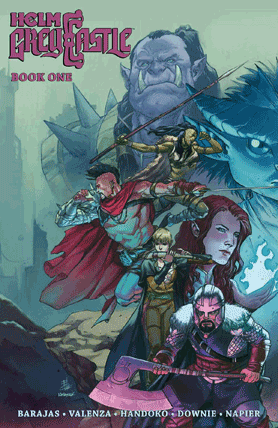

A lot of comics in a lot of genres - if you like comics there ought to be something to interest you - but if you only want one or two titles cherry-picking the ones you want may be a better option.
https://bundleofholding.com/presents/TopCow
A lot of comics in a lot of genres - if you like comics there ought to be something to interest you - but if you only want one or two titles cherry-picking the ones you want may be a better option.
Trace Elements by Jo Walton & Ada Palmer
Jun. 8th, 2026 01:55 pmmagentaWow, what an excellent collection of essays!
There is one I especially want to point out, "Hopepunk, Optimism, Purity..." I was never sure of what Hopepunk was. Now I know. I live in a hopepunk city, Minneapolis. St Paul is one as well, so is Portland, OR. That thought will keep me going for the day, maybe longer.
There is one I especially want to point out, "Hopepunk, Optimism, Purity..." I was never sure of what Hopepunk was. Now I know. I live in a hopepunk city, Minneapolis. St Paul is one as well, so is Portland, OR. That thought will keep me going for the day, maybe longer.
This is all pretty alien to me for several reasons
Jun. 8th, 2026 07:35 pmoursinThe Ph.D. Is Not a Pit Stop for Creative Writers: Don’t do a Ph.D. program because you want to work on your novel. (Well, with the proviso perhaps that you're not using the PhD programme as MATERIAL either for a campus novel or maybe a murder mystery or even a rom-com.)
But, okay, the UK system is different anyway (this looks to be very much about the US setup), and anyway I did my PhD in a history-related discipline Many Years Ago and I was basically Doing It For Fun, although my workplace also considered it a form of professional development and gave me study leave, paid fees, etc.
And at the same time I was writing fiction - sf and fantasy, i.e something pretty much unrelated to my research (though that, as it were, mulched down into the soil that nourished the roots of a much later fictional endeavour!).
So it was a break and something different using different mental muscles.
I am pretty much there with the author of the article that the anticipated synergy is unlikely to be there, and the credo that
I truly believe that one has a better chance of becoming a writer by working at a bakery, a coffee shop, a bookstore, a 9-to-5 corporate job, a blueberry farm, a publishing house, etc.
(I am reminded of a Jules Feiffer cartoon featuring a guy behind a bar who mentions all these guys who used to come into the bar he tended who had sold their novel on their basis of having done these various manly roughneck career things, like working on fishing boats and tending bar, and he pitched a novel on the basis that he has done all those things, taken the advance and set himself up with a bar of his own.) (If anyone can point me at this, please do.)
Also that 'Much of the performance of creative writing happens in moments of quietude and, quite frankly, daydreaming'.
We are given to wonder whether the people who undertake this rather ill-advised course are writing for FUN or is it srs bznz? Perhaps they would do well to consider the case of Carolyn Heilbrun/Amanda Cross and writing a kind of campus fiction that involves pushing pompous professors out of windows and finding out whodunnit.
What can a friend do to try and convince you that trouble's the cost of being alive?
Jun. 8th, 2026 01:57 pmsovayGood Monday! I slept an hour and have to fight with both my insurance and the city parking department. Have a small number of links.
1. Thanks to the ongoing movement to eat the invasive green crab, I have discovered the existence of Maine Garum. Of course I want to order a bottle of their fish sauce; I haven't had garum in the kitchen since our last apartment. Then I want to order their crab sauce, because intense oceanic funk is most attractive to me.
2. Since I last checked in on Dermot Turing, he has produced two books of obvious interest to me: Enigma Traitors: The Struggle to Lose the Cipher War (2023) and Misread Signals: How History Overlooked Women Codebreakers (2025). The first makes me hope he has written about Leo Marks and Englandspiel, the second is right on.
3. Have a photoset of Peter O'Toole and Richard Burton outside a pub in Shepperton, 1963. They are obviously in the middle of filming Becket (1964) and just as obviously are the modern AU. "He's drunk and wenched his way through London, but he's thinking all the time."
I have draft schedules for both Readercon and NecronomiCon Providence. I like the looks of both of them. Wish my constitution luck.
1. Thanks to the ongoing movement to eat the invasive green crab, I have discovered the existence of Maine Garum. Of course I want to order a bottle of their fish sauce; I haven't had garum in the kitchen since our last apartment. Then I want to order their crab sauce, because intense oceanic funk is most attractive to me.
2. Since I last checked in on Dermot Turing, he has produced two books of obvious interest to me: Enigma Traitors: The Struggle to Lose the Cipher War (2023) and Misread Signals: How History Overlooked Women Codebreakers (2025). The first makes me hope he has written about Leo Marks and Englandspiel, the second is right on.
3. Have a photoset of Peter O'Toole and Richard Burton outside a pub in Shepperton, 1963. They are obviously in the middle of filming Becket (1964) and just as obviously are the modern AU. "He's drunk and wenched his way through London, but he's thinking all the time."
I have draft schedules for both Readercon and NecronomiCon Providence. I like the looks of both of them. Wish my constitution luck.
Planning the French Drain
Jun. 8th, 2026 12:23 pmljgeoffPlanning, first, for the half-round. I'm thinking that I'll only run it on three sides. I dunno if the backhoe would damage the pipe, rolling in and out of the shelter.
To run along three sides of the half-round, I'll need about 90 feet of trench, 14" wide and averaging 36" deep- it needs to slant down to the cistern.
90*12*14*36=544,320"
544,320/46660= 11.7 cubic yards of crushed #57 rock. I've contacted a gravel company and I expect that this'll cost about $800 - $1000
The filter fabric is about $500 for 10' wide by 100' long
Non-Woven Geotextile Filter Fabric 8 oz - Landscape Fabric - Sandbaggy
The PVC pipe is going to be around $100
"For best results you need to use these steps. Dig a 14” wide trench and line the trench with the 8 oz. commercial filter fabric. Then put 3 inches of rock at the bottom of the trench. Place the 4” perforated corrugated pipe (without a sock on the pipe) on top of the rock. Next fill in around the pipe with stone on all sides and wrap the filter fabric on top. Now it is fully contained to not allow sediment or solids to contaminate the French drain compromising its performance." French Drain Man
To run along three sides of the half-round, I'll need about 90 feet of trench, 14" wide and averaging 36" deep- it needs to slant down to the cistern.
90*12*14*36=544,320"
544,320/46660= 11.7 cubic yards of crushed #57 rock. I've contacted a gravel company and I expect that this'll cost about $800 - $1000
The filter fabric is about $500 for 10' wide by 100' long
Non-Woven Geotextile Filter Fabric 8 oz - Landscape Fabric - Sandbaggy
The PVC pipe is going to be around $100
Seen in Lidl
Jun. 8th, 2026 05:36 pmshewhomustIt's not news that supermarkets stock numerous products which claim to be high in protein. Mostly I hardly notice them: I'm not interested. There's nothing wrong with protein, but there is enough in my normal diet, I don't need to supplement it. That being so, if something I might otherwise buy - yoghurt, say - is advertised as high in protein, I automatically avoid it. This may be irrational, but there it is.
But for some reason, in Lidl last week something caught my eye: high-protein tiramisu.
It's a small step, I suppose, from yoghurt to tiramisu, but it still seems incongruous: My protein levels are deficient. Bring me tiramisu!
But for some reason, in Lidl last week something caught my eye: high-protein tiramisu.
It's a small step, I suppose, from yoghurt to tiramisu, but it still seems incongruous: My protein levels are deficient. Bring me tiramisu!
scaturient
Jun. 8th, 2026 07:09 amprettygoodwordscaturient (skuh-TOOR-ee-uhnt) - adj., overflowing, gushing; overly demonstrative, effusive.
So physically and metaphorically overflowing. Bubbly also works in those two ways. Not a common word -- I can't recall meeting it until it showed up on a word-of-the-day list. Dates to around 1670, that prime area of Latinate imports, from Latin scaturient-, stem form of scaturiens, present participle of scaturire, to gush out, from (I think as a frequentive form?) scatere, to bubble/gush.
---L.
So physically and metaphorically overflowing. Bubbly also works in those two ways. Not a common word -- I can't recall meeting it until it showed up on a word-of-the-day list. Dates to around 1670, that prime area of Latinate imports, from Latin scaturient-, stem form of scaturiens, present participle of scaturire, to gush out, from (I think as a frequentive form?) scatere, to bubble/gush.
---L.